Review of
In St. George's Name
An Anthology of Medieval German Fighting Arts
by Christian Henry Tobler
Published by Freelance Academy Press, Inc. 2010
This latest offering from Mr. Tobler is a compendium of articles, lesson plans, and translations, including a complete translation (the first in English) of Codex 44 A 8, the “Peter von Danzig” manuscript. In general, the book is well written with a clear, clean layout that makes reading it a joy.
My favorite article has to be the transcription/translation/interpretation (accompanied by photos) of the anonymous pollaxe treatise from the Paulus Kal Fechtbuch. I know, big shocker right? The text itself consists of seven techniques, with five of the paragraphs dealing with a high guard vs low guard combination and the remaining two having both combatants in a high guard. The techniques themselves are straightforward and easy to understand. The most common being, after the initial bind, using the free end of the weapon to strike the opponent in whatever manner works best.
The opening article, “Chicken and Eggs: Which Master Came First?”, asks the question “What do we really know?” It is an excellent piece of scholarship about how we need to look at the manuscripts and any dates they contain.
The article “Hot, Wet, Cold, and Dry: The Four Guards” provides an intriguing journey into the way the “medieval mind” might have viewed the four primary guards of the German tradition as a connection to the classical four elements. Though this is all speculation, as no medieval author explicitly draws the connection between the guards and the elements, the scholarship is wonderful and leaves the reader with a lot to chew on.
The other article that caught my interest was “Lance, Spear, Sword, and Messer” in which the author puts forth two claims: First, that students of the Chivalric Arts should study more than just one weapon, and Second, that certain basic techniques can be applied across different weapons. Regarding the first claim, I wholeheartedly agree! If you are going to study an art that encompasses many different weapons, you need to study all the weapons you can in order to gain greater knowledge of your art. As for the second, this article follows the same premise as the author's class at 4W 2010, entitled “As Above, So Below”, where over three days we explored similar techniques with the longsword, sword & buckler, and dagger. While some may view the author's extrapolation, and inclusions, of techniques not included in the actual manuscripts as being detrimental to the study of historical martial arts, I disagree. So long as the extrapolated plays follow the principles of the Art and the practitioner has a solid knowledge of that Art, I see no problems with extrapolated plays. That is, after all, the whole-freaking-point of martial arts – to train certain principles until they are second nature and I can utilize them, no matter the situation, no matter the weapon.
As to the rest of the articles and the “Von Danzig” translation, they deal with specific weapons in the German tradition and read as fleshed out lesson plans. As I don't study the German stuff, I can't really comment on the technical aspects other than to say I will definitely be playing with this material.
This book is a must-have for any WMA practitioner, German, Italian or otherwise!
Wednesday, April 14, 2010


Monday, April 12, 2010
WMA Spectrum
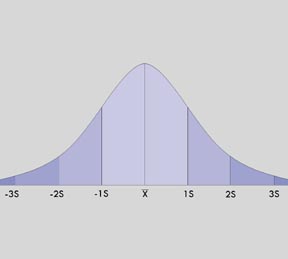
In the world of WMA/HEMA, as with any activity, there are numerous divisive topics. One only has to cruise the numerous WMA-centric forums to note that these topics never seem to die, but are constantly revived, either by unsuspecting newcomers or long-time proponents of one side or the other who believe they have “new” information that can sway the masses. As with most arguments, it seems that those who inhabit the extreme ends of the spectrum are the most vocal, resulting in a skewed vision of “the divided community”. The reality is that the majority of the community lies somewhere between the two extremes, with most right in the middle, “straddling the fence” as it were (Bell curve anyone?).

The point of this post is not to call out individual persons or groups for their beliefs. Rather, I will try to present as objective a rundown on a few key arguments as I can, while also providing my (usually) middle-ground view of the argument.
Edge vs Flat parry This argument, without fail, appears at least once a year. The question is whether in the Western Martial Arts one parries with the edge or flat of the blade. But the question is a lot more complicated than that. Are we talking longsword, sword & buckler, rapier, Bolognese, Silver, etc. Given that I am a longsword guy primarily, I will refer to only that weapon. This whole argument comes from looking at the often imperfect artwork in the manuscripts. These illustrations attempt to show 3D actions in a 2D medium, without that wonderful invention of perspective. Swords tend to be shown flat-on so that you, the reader, can actually see them. The biggest problem whenever this argument pops up is the lack of definition: What does “flat parry” mean? What does “edge parry” mean?
To the Flat-Only people, an edge parry seems to describe any action where you consciously bring your sword into the other guy's at a 90º angle, thus chipping the crap out of your blade. And this is always their biggest argument; that you are needlessly damaging your blade, where parrying with the flat saves your edge from nicking and chipping.
The Edge-Only people view any parry with the flat of the blade the same as Flat-Only view edge parries; two blades clashing at a 90º angle, with your opponent's blade crashing into your flat.
The argument from the Edge-Only folks is that this type of parry is structurally weak – if you parry with your flat like that, all the force of your opponent's blow goes into your wrist. In contrast, an edge parry aligns your edge, with your wrist, forearm, upper arm, etc. allowing you to deal with your opponent's energy better.
But the truth of the matter is that blades very, very rarely meet at a 90º angle, most often meeting at an oblique angle. And both Edge-Only and Flat-Only people will tell you this. So both camps perform parries that look.....pretty much the same honestly.
My view: I have always been an edge parry guy, because that is how I was taught and I agree that anything other than an oblique flat parry causes significant wrist problems, even pain, and that aligning the edge with your bones is the way to go. But I don't depend on just my teacher's word; I parry with the edge because my studies of Fiore tell me that this works, and it works well. As for the damaging your sword argument – yes, my sword will get damaged. But better my sword than my head. The sword is a tool and a tool has a specific purpose. Just because the nails I pound in mar the head of my hammer does not mean that I begin hitting them with the side of the hammer-head. I do try to keep an open mind on this and am perfectly willing to be proven wrong, but in the end it's personal preference – my personal interpretations of Fiore, as well as bio-mechanics, tell me to parry with an oblique striking of edge-on-edge and this works for me.
Free-play vs Non Free-play
This argument is really about who is “Doing It For Real”.
The Pro Free-play folks believe that we can only really understand these arts by strapping up and trying to beat the snot out of each other, with the extreme version of this being involving people who do little-to-no technique drilling, instead receiving basic course in the art and then being thrown into the lion's den, so to speak.
The other end of the spectrum are those who believe that because “Doing It For Real” would involve sharp swords and actually trying to kill each other, it is therefore an impossible goal and we should instead focus only on paired drill exercises to understand the arts.
Let's get this out of the way right now: This is nothing but a “Mine is Bigger Than Yours” game, with those who on the the extreme Pro end of the spectrum accusing their counterparts of not doing free-play because “they suck at it” and the latter accusing the former of being uncultured imbeciles playing a sport, “sword tag”.
My view: Right smack-freaking-dab in the middle. I love paired drills and I have given out (and received) my fair share of butt-wallopings during free-play. I disagree with participating in free-play without a solid understanding of your art, which is learned through paired drills.
However I do believe that pressure testing your interpretations through free-play is important. As to the sporting aspect, people love to compete. We're hard-wired to compete. What really bothers me is that many of the extreme Pro Free-play people regard people like me who occasionally free-play the same as those who don't, with disdain.
Historical clothing vs Modern clothing
The argument here is whether we ought to practice our arts wearing period-correct clothing or if modern clothes are fine. This usually revolves around footwear.
The extreme end of the Historical Clothing people will not practice in anything less than turn-shoes, hose, and a gambeson/doublet and require their students to purchase the same.
The extreme end of the Modern Clothing people say that period-correct clothing doesn't matter. Why bother wearing turn-shoes when I wear modern athletic shoes most of the time?
This is a relatively low-anger argument, with most people openly acknowledging that their in the middle. The problem with saying that period-correct clothing does not matter is that...well, it does. One example is that Fiore's wrestling is much easier against someone wearing a long-sleeved shirt or coat than it is against a t-shirt, because it was designed to be used against someone wearing long-sleeved garment. The plus side to wearing modern workout clothes, especially in demonstrations, is in the audience's perception. The Northwest Fencing Academy's “uniform” is: solid black, long workout pants or sweats, a plain white t-shirt, or school shirt. This uniform is augmented by gambesons, etc. where needed. With no offense to the SCA, LARP groups, or Historical Recreation groups around the world, my school is not one. Many of the students, and many of my good friends in the WMA community, are (or have been) involved in those groups. So our uniform tends to make us look like a modern martial arts school, which is how the general public views us. To some this is a cop-out – we should wear period correct clothing and change public perception. The problem is that Joe Public associates period correct clothing with Renn Faires, SCA, LARPing etc. and so WMA gets lumped in with the rest.
My view: I want people to understand that WMA is it's own entity and I will dress according to the audience I am speaking to. Asked to teach at a local SCA event? Where full kit and live it up! Asked to participate in a local martial arts conference? Where a more “modern” looking uniform and impress with your skills and knowledge, not your dress!
Traditionalist vs Holistic
The Traditionalists (for lack of a better term) believe that each sword tradition must be viewed on its own, with the techniques studied coming only from that tradition. Individual traditions can be compared, but are not compatible, with other traditions, even those that use the same weapon. In other words, a practitioner of the German tradition of longsword can learn nothing by studying the Italian or English longsword traditions and, in fact, will only dilute the “True Art” they study.
The Holistics, on the other hand, believe in the “One True Art of the Sword”, which they believe to have been Pan-European, thus why many techniques look similar between the German, English and Italian traditions. They have no trouble using another tradition to fill in the blanks left by their own.
My view: This is kind of a tricky one. On one hand, a Pan-European sword art makes a ton of sense. After all, we know that medieval peoples traveled throughout Europe constantly, trading ideas and techniques. We also know that many of the masters who wrote their systems down acknowledge studying with, and teaching, swordsmen of other countries. Fiore, for instance, tells us he studied with both German and Italian masters. But if the Pan-European hypothesis is true, then why is Fiore's longsword system not simply “Liechtenhaur in Italian”? All students, in my opinion, should study another tradition (at least take a few classes in it). But only after they have a secure grounding in their tradition. The key is being able to “empty your cup” while still being able to analyze what you're learning in the light of your tradition. Yes, all sword arts are related because they all start with the same basic building block – the human body. The biggest advantage to me in dabbling in the German tradition is that when I'm teaching at an event, where some of the students may come from the German tradition, I can explain a technique using different terms. I have more tools in my toolbox.
Tying it All Together
In the end I can only give a few pieces of advice:
1) Remember that while those on the extreme's of an argument will be the most vocal, the majority of people will be somewhere in between the two extremes.
2) Remember that everything I've talked about (and the arguments I left out) come down to personal preference. If you don't like what I do, don't pay attention to me. If you don't like what I say, don't listen to me.
The point of this post is not to call out individual persons or groups for their beliefs. Rather, I will try to present as objective a rundown on a few key arguments as I can, while also providing my (usually) middle-ground view of the argument.
Edge vs Flat parry This argument, without fail, appears at least once a year. The question is whether in the Western Martial Arts one parries with the edge or flat of the blade. But the question is a lot more complicated than that. Are we talking longsword, sword & buckler, rapier, Bolognese, Silver, etc. Given that I am a longsword guy primarily, I will refer to only that weapon. This whole argument comes from looking at the often imperfect artwork in the manuscripts. These illustrations attempt to show 3D actions in a 2D medium, without that wonderful invention of perspective. Swords tend to be shown flat-on so that you, the reader, can actually see them. The biggest problem whenever this argument pops up is the lack of definition: What does “flat parry” mean? What does “edge parry” mean?
To the Flat-Only people, an edge parry seems to describe any action where you consciously bring your sword into the other guy's at a 90º angle, thus chipping the crap out of your blade. And this is always their biggest argument; that you are needlessly damaging your blade, where parrying with the flat saves your edge from nicking and chipping.
The Edge-Only people view any parry with the flat of the blade the same as Flat-Only view edge parries; two blades clashing at a 90º angle, with your opponent's blade crashing into your flat.
The argument from the Edge-Only folks is that this type of parry is structurally weak – if you parry with your flat like that, all the force of your opponent's blow goes into your wrist. In contrast, an edge parry aligns your edge, with your wrist, forearm, upper arm, etc. allowing you to deal with your opponent's energy better.
But the truth of the matter is that blades very, very rarely meet at a 90º angle, most often meeting at an oblique angle. And both Edge-Only and Flat-Only people will tell you this. So both camps perform parries that look.....pretty much the same honestly.
My view: I have always been an edge parry guy, because that is how I was taught and I agree that anything other than an oblique flat parry causes significant wrist problems, even pain, and that aligning the edge with your bones is the way to go. But I don't depend on just my teacher's word; I parry with the edge because my studies of Fiore tell me that this works, and it works well. As for the damaging your sword argument – yes, my sword will get damaged. But better my sword than my head. The sword is a tool and a tool has a specific purpose. Just because the nails I pound in mar the head of my hammer does not mean that I begin hitting them with the side of the hammer-head. I do try to keep an open mind on this and am perfectly willing to be proven wrong, but in the end it's personal preference – my personal interpretations of Fiore, as well as bio-mechanics, tell me to parry with an oblique striking of edge-on-edge and this works for me.
Free-play vs Non Free-play
This argument is really about who is “Doing It For Real”.
The Pro Free-play folks believe that we can only really understand these arts by strapping up and trying to beat the snot out of each other, with the extreme version of this being involving people who do little-to-no technique drilling, instead receiving basic course in the art and then being thrown into the lion's den, so to speak.
The other end of the spectrum are those who believe that because “Doing It For Real” would involve sharp swords and actually trying to kill each other, it is therefore an impossible goal and we should instead focus only on paired drill exercises to understand the arts.
Let's get this out of the way right now: This is nothing but a “Mine is Bigger Than Yours” game, with those who on the the extreme Pro end of the spectrum accusing their counterparts of not doing free-play because “they suck at it” and the latter accusing the former of being uncultured imbeciles playing a sport, “sword tag”.
My view: Right smack-freaking-dab in the middle. I love paired drills and I have given out (and received) my fair share of butt-wallopings during free-play. I disagree with participating in free-play without a solid understanding of your art, which is learned through paired drills.
However I do believe that pressure testing your interpretations through free-play is important. As to the sporting aspect, people love to compete. We're hard-wired to compete. What really bothers me is that many of the extreme Pro Free-play people regard people like me who occasionally free-play the same as those who don't, with disdain.
Historical clothing vs Modern clothing
The argument here is whether we ought to practice our arts wearing period-correct clothing or if modern clothes are fine. This usually revolves around footwear.
The extreme end of the Historical Clothing people will not practice in anything less than turn-shoes, hose, and a gambeson/doublet and require their students to purchase the same.
The extreme end of the Modern Clothing people say that period-correct clothing doesn't matter. Why bother wearing turn-shoes when I wear modern athletic shoes most of the time?
This is a relatively low-anger argument, with most people openly acknowledging that their in the middle. The problem with saying that period-correct clothing does not matter is that...well, it does. One example is that Fiore's wrestling is much easier against someone wearing a long-sleeved shirt or coat than it is against a t-shirt, because it was designed to be used against someone wearing long-sleeved garment. The plus side to wearing modern workout clothes, especially in demonstrations, is in the audience's perception. The Northwest Fencing Academy's “uniform” is: solid black, long workout pants or sweats, a plain white t-shirt, or school shirt. This uniform is augmented by gambesons, etc. where needed. With no offense to the SCA, LARP groups, or Historical Recreation groups around the world, my school is not one. Many of the students, and many of my good friends in the WMA community, are (or have been) involved in those groups. So our uniform tends to make us look like a modern martial arts school, which is how the general public views us. To some this is a cop-out – we should wear period correct clothing and change public perception. The problem is that Joe Public associates period correct clothing with Renn Faires, SCA, LARPing etc. and so WMA gets lumped in with the rest.
My view: I want people to understand that WMA is it's own entity and I will dress according to the audience I am speaking to. Asked to teach at a local SCA event? Where full kit and live it up! Asked to participate in a local martial arts conference? Where a more “modern” looking uniform and impress with your skills and knowledge, not your dress!
Traditionalist vs Holistic
The Traditionalists (for lack of a better term) believe that each sword tradition must be viewed on its own, with the techniques studied coming only from that tradition. Individual traditions can be compared, but are not compatible, with other traditions, even those that use the same weapon. In other words, a practitioner of the German tradition of longsword can learn nothing by studying the Italian or English longsword traditions and, in fact, will only dilute the “True Art” they study.
The Holistics, on the other hand, believe in the “One True Art of the Sword”, which they believe to have been Pan-European, thus why many techniques look similar between the German, English and Italian traditions. They have no trouble using another tradition to fill in the blanks left by their own.
My view: This is kind of a tricky one. On one hand, a Pan-European sword art makes a ton of sense. After all, we know that medieval peoples traveled throughout Europe constantly, trading ideas and techniques. We also know that many of the masters who wrote their systems down acknowledge studying with, and teaching, swordsmen of other countries. Fiore, for instance, tells us he studied with both German and Italian masters. But if the Pan-European hypothesis is true, then why is Fiore's longsword system not simply “Liechtenhaur in Italian”? All students, in my opinion, should study another tradition (at least take a few classes in it). But only after they have a secure grounding in their tradition. The key is being able to “empty your cup” while still being able to analyze what you're learning in the light of your tradition. Yes, all sword arts are related because they all start with the same basic building block – the human body. The biggest advantage to me in dabbling in the German tradition is that when I'm teaching at an event, where some of the students may come from the German tradition, I can explain a technique using different terms. I have more tools in my toolbox.
Tying it All Together
In the end I can only give a few pieces of advice:
1) Remember that while those on the extreme's of an argument will be the most vocal, the majority of people will be somewhere in between the two extremes.
2) Remember that everything I've talked about (and the arguments I left out) come down to personal preference. If you don't like what I do, don't pay attention to me. If you don't like what I say, don't listen to me.
Wednesday, March 31, 2010
Meditations on Fiore's Segno
DISCLAIMER: This is not an attempt to discover “The Fiore Code” or anything like that. This is just my musings and meditations on Fiore's Segno.
Symbols in General
A symbol, as defined by the Merriam-Webster dictionary, is “something that stands for or suggests something else by reason of relationship, association, convention [or] a visible sign of something invisible.” A well-thought out symbol must be able to portray maximum information in a minimum package. Symbols are extremely efficient and surround us in our daily lives. They range from the simple, such as arrows telling us direction, to the complex, representing elements on the periodic table of elements. At the most basic level, our alphabet and number system are nothing but symbols; representing sounds and quantities. Symbols may portray universal (or nearly so); a red cross or red crescent moon on a white field symbolizing the International Red Cross, or a circle with lines coming out of it is indicative of the sun, or how a particular swoosh brings to mind the Nike company. This brings up another point; while the meaning of a symbol may be universal, the connotation of that symbol will vary from culture to culture, and person to person. Take Nike for example; to me it brings to mind the University of Oregon where the company was created (and where I received lots of free Nike swag as a member of the marching band). To someone else, that swoosh represents athletic prowess and power; and to yet another it portrays child labor and human rights violations. But it's just one little swoosh, right?
The beautiful thing about symbols is that while their meanings may not be universal, their use is universal. Symbols are used by every culture (remember that our alphabet is nothing but symbols) because of how efficient they are at storing information. I would even argue that symbols are so prevalent because our brain is wired to use symbols for memorization. One of the most popular memory training systems in both Ancient History and the Middle Ages involves the use of a “mansion” with many “rooms” in which are stored the defining symbols of a memory (for a very interesting, and very dense, book on memory and memory training see The Book of Memory by Mary J. Carruthers). Basically the way our minds store information is the same way we've designed our computers to, by condensing information on a subject into a small package, represented by an "icon". When we "click" (of focus) on this icon suddenly all the pertinent information comes to the fore.
The exciting thing about teaching with symbols is that the more you learn the system represented by the symbols, the more information is "present" in each symbol. When I look at the Periodic Table of Elements, for example, and see the symbol "Au" I know that this represents the metal gold (mostly because of the titular villain from the Bond movie "Goldfinger" - Auric Goldfinger. I'm a geek, I know.) However when my sister, the research chemist, sees the symbol "Au" she not only knows that it means gold, but also knows the atomic number, the atomic mass, etc. because she has more training in the “system” of the Periodic Table of Elements. So the more you train, the more information you're adding to the file represented by its icon.
Fiore's Segno
The Segno
The primary source for symbols in Fiore's Armizare is the Segno (It. "sign"), a full page diagram showing the seven sword blows and the four virtues required for the Art, all surrounding the figure of a man, sometimes with a crown on, or hovering above, his head.
The Seven Sword Blows
The seven blows of the sword are shown in the Segno as individual swords; two coming down from each side at a 45° angle, two rising from each side at a 45° angle, two coming in horizontally from each side , and one coming up the center-line from below. These swords form an inverted seven point star. This is a nice memory device for remembering what and how many blows are in the system. I will also suggest (and this has been put forth by Fiorists before me) that the seven swords also represent a compass for footwork directions; diagonally forward, diagonally backward, sideways, and forward and back. We know this was done by other authors of fechtbuch, in the German, Italian and Spanish systems (albeit, most of them were later authors than Fiore) so it would not completely out of place. But why seven? After all every blow shown has an opposite, except the thrust Wouldn't eight swords be more symmetrical? Yes, but there are two very good reasons for only seven blows. The first is the simplest; because the thrust covers the entire center-line, it does not require a downward counterpart. The second, and more esoteric, reason is because in the medieval mind, seven was a very important number. There are seven deadly sins, seven virtues, seven sacraments, and seven known planets in medieval Europe. The number seven can also be seen as the combination of the number of elements (four) with the number of divinity (three). There is also an allusion to the representation of the Virgin Mary as Our Lady of the Seven Sorrows, also called Swords, where Mary's heart is pierced by seven swords arrayed in a star pattern (my thanks to Maestro Sean Hayes for pointing this out in his lectures on the correlation between the fight manuscripts and contemporary artwork).
The Four Virtues of the Swordsman
Fiore describes four virtues that the swordsman (or swordswoman – for simplicity I will just write swordsman) must posses: Quickness, Courage, Strength, and Judgment. In the Segno, each of these is represented by two related symbols; one an object, the second an animal from the medieval bestiary.
First a quick note on the bestiary – the depictions of the animals in the bestiary were not meant to be literal, but allegorical. For instance, the bestiary description of the pelican claimed that it pierced it's own breast to feed its young on its own blood. The authors of the bestiaries knew that this isn't how the pelican fed her young, but dang it, it makes a great allegory for Christ doesn't it?
At the bottom of the figure we have Strength (or Fortitude), represented by an elephant with a tower on his back. In the bestiary, the elephant is depicted without knees (as it is in the Segno) meaning that if it lost its footing or fell over, it would die. The elephant, along with the tower (then, and still, a symbol for power and strength) admonish the swordsman to keep upright and have good footwork.
At the figure's right (left side of the page) is Quickness (or Speed), represented by a tiger holding an arrow, both of which indicate speed. This tiger looks an awful lot like a greyhound, which is a good modern analogy for this virtue. For the swordsman, quickness is required both in the motions of the body, but also in the motions of the weapon.
Above the figure is Judgment (or Caution or Prudence), represented by a lynx (or stag-hound) holding a geometric compass. All of these symbols deal with sight and distance; the lynx was purported to see into the future, the stag-hound hunts by sight, and the compass measures the distance between points. The ability to judge, and understand, distance is crucial to the swordsman. But Judgment does not simply cover the distance between fighters - the true master of Armizare must also be able to judge whether or not to fight, or to what degree to fight. Many techniques in Fiore's manuscripts can have either lethal or non-lethal applications. After all, it just wouldn't do to kill the favorite nephew of the Medici, even if he was drunk and tried to stab you. So, understanding the application of lethal force also falls under the jurisdiction of the stag-hound.
The final virtue sits to the figure's left (page right) and is Courage. The symbols which accompany it, the lion and a heart, are the easiest to interpret by modern viewers because we still use them today! (The Cowardly Lion from the Wizard of Oz anyone? And how was the courage he so desperately wanted manifested? In a heart-shaped medal. Ahh the universality of symbols). Courage is important to the swordsman because, well, they are facing severe bodily harm in what they do. In the prologue to the Getty, Fiore claims that in a fight with sharp swords, one missed cover can mean death. Even for modern students (who will never in their life fight with a sharp sword) courage is still necessary – even training swords can hurt! Just ask the missing tip of my pinky! While every good teacher and student will do their best to ensure they don't occur, accidents will happen. We practice a martial art – bumps, bruises, scrapes and even the occasional broken bone are par for the course.
The Figure
At the center of the Segno is the most obvious symbol, but one that I tended to overlook due to it's simplicity. It is the figure of the man. In the Pissani-Dossi and Florius versions, the figure is shown wearing what appear to be basic arming clothes – a gambeson or cotte and hose. In the Getty, the figure is shown wearing scholar's (student's) robes. So the figure in the center is a student of the Art. In the Getty and the Florius the figure is shown with a crown hovering above his head and wearing a crown, respectively. The crown, as used in Fiore's organization system for the manuscripts, indicates mastery. Thus, in the Florius we are shown a master while, in the Getty we are shown a scholar who has yet to attain mastery. I prefer to use the Getty's Segno as I like the combination of the scholar's robes with the yet-to-be-attained mastery implied by the hovering crown.
A final point to consider about the figure is that without him, the Segno lacks focus. The seven swords all point to the center of the figure (interestingly enough, seemingly near the body's center of gravity) and the animals locations around the figure are not accidental; the lynx (sight) appears above the head, the lion (heart) on the figure's left (heart) side, the tiger (speed) on the figure's right (weapon hand) side, and the elephant (footwork) under the figure's feet. Without the figure, these locations on the page would make no sense. So, the student is the framework on which the Art itself is built.
Symbols in General
A symbol, as defined by the Merriam-Webster dictionary, is “something that stands for or suggests something else by reason of relationship, association, convention [or] a visible sign of something invisible.” A well-thought out symbol must be able to portray maximum information in a minimum package. Symbols are extremely efficient and surround us in our daily lives. They range from the simple, such as arrows telling us direction, to the complex, representing elements on the periodic table of elements. At the most basic level, our alphabet and number system are nothing but symbols; representing sounds and quantities. Symbols may portray universal (or nearly so); a red cross or red crescent moon on a white field symbolizing the International Red Cross, or a circle with lines coming out of it is indicative of the sun, or how a particular swoosh brings to mind the Nike company. This brings up another point; while the meaning of a symbol may be universal, the connotation of that symbol will vary from culture to culture, and person to person. Take Nike for example; to me it brings to mind the University of Oregon where the company was created (and where I received lots of free Nike swag as a member of the marching band). To someone else, that swoosh represents athletic prowess and power; and to yet another it portrays child labor and human rights violations. But it's just one little swoosh, right?
The beautiful thing about symbols is that while their meanings may not be universal, their use is universal. Symbols are used by every culture (remember that our alphabet is nothing but symbols) because of how efficient they are at storing information. I would even argue that symbols are so prevalent because our brain is wired to use symbols for memorization. One of the most popular memory training systems in both Ancient History and the Middle Ages involves the use of a “mansion” with many “rooms” in which are stored the defining symbols of a memory (for a very interesting, and very dense, book on memory and memory training see The Book of Memory by Mary J. Carruthers). Basically the way our minds store information is the same way we've designed our computers to, by condensing information on a subject into a small package, represented by an "icon". When we "click" (of focus) on this icon suddenly all the pertinent information comes to the fore.
The exciting thing about teaching with symbols is that the more you learn the system represented by the symbols, the more information is "present" in each symbol. When I look at the Periodic Table of Elements, for example, and see the symbol "Au" I know that this represents the metal gold (mostly because of the titular villain from the Bond movie "Goldfinger" - Auric Goldfinger. I'm a geek, I know.) However when my sister, the research chemist, sees the symbol "Au" she not only knows that it means gold, but also knows the atomic number, the atomic mass, etc. because she has more training in the “system” of the Periodic Table of Elements. So the more you train, the more information you're adding to the file represented by its icon.
Fiore's Segno
The Segno
The primary source for symbols in Fiore's Armizare is the Segno (It. "sign"), a full page diagram showing the seven sword blows and the four virtues required for the Art, all surrounding the figure of a man, sometimes with a crown on, or hovering above, his head.
The Seven Sword Blows
The seven blows of the sword are shown in the Segno as individual swords; two coming down from each side at a 45° angle, two rising from each side at a 45° angle, two coming in horizontally from each side , and one coming up the center-line from below. These swords form an inverted seven point star. This is a nice memory device for remembering what and how many blows are in the system. I will also suggest (and this has been put forth by Fiorists before me) that the seven swords also represent a compass for footwork directions; diagonally forward, diagonally backward, sideways, and forward and back. We know this was done by other authors of fechtbuch, in the German, Italian and Spanish systems (albeit, most of them were later authors than Fiore) so it would not completely out of place. But why seven? After all every blow shown has an opposite, except the thrust Wouldn't eight swords be more symmetrical? Yes, but there are two very good reasons for only seven blows. The first is the simplest; because the thrust covers the entire center-line, it does not require a downward counterpart. The second, and more esoteric, reason is because in the medieval mind, seven was a very important number. There are seven deadly sins, seven virtues, seven sacraments, and seven known planets in medieval Europe. The number seven can also be seen as the combination of the number of elements (four) with the number of divinity (three). There is also an allusion to the representation of the Virgin Mary as Our Lady of the Seven Sorrows, also called Swords, where Mary's heart is pierced by seven swords arrayed in a star pattern (my thanks to Maestro Sean Hayes for pointing this out in his lectures on the correlation between the fight manuscripts and contemporary artwork).
The Four Virtues of the Swordsman
Fiore describes four virtues that the swordsman (or swordswoman – for simplicity I will just write swordsman) must posses: Quickness, Courage, Strength, and Judgment. In the Segno, each of these is represented by two related symbols; one an object, the second an animal from the medieval bestiary.
First a quick note on the bestiary – the depictions of the animals in the bestiary were not meant to be literal, but allegorical. For instance, the bestiary description of the pelican claimed that it pierced it's own breast to feed its young on its own blood. The authors of the bestiaries knew that this isn't how the pelican fed her young, but dang it, it makes a great allegory for Christ doesn't it?
At the bottom of the figure we have Strength (or Fortitude), represented by an elephant with a tower on his back. In the bestiary, the elephant is depicted without knees (as it is in the Segno) meaning that if it lost its footing or fell over, it would die. The elephant, along with the tower (then, and still, a symbol for power and strength) admonish the swordsman to keep upright and have good footwork.
At the figure's right (left side of the page) is Quickness (or Speed), represented by a tiger holding an arrow, both of which indicate speed. This tiger looks an awful lot like a greyhound, which is a good modern analogy for this virtue. For the swordsman, quickness is required both in the motions of the body, but also in the motions of the weapon.
Above the figure is Judgment (or Caution or Prudence), represented by a lynx (or stag-hound) holding a geometric compass. All of these symbols deal with sight and distance; the lynx was purported to see into the future, the stag-hound hunts by sight, and the compass measures the distance between points. The ability to judge, and understand, distance is crucial to the swordsman. But Judgment does not simply cover the distance between fighters - the true master of Armizare must also be able to judge whether or not to fight, or to what degree to fight. Many techniques in Fiore's manuscripts can have either lethal or non-lethal applications. After all, it just wouldn't do to kill the favorite nephew of the Medici, even if he was drunk and tried to stab you. So, understanding the application of lethal force also falls under the jurisdiction of the stag-hound.
The final virtue sits to the figure's left (page right) and is Courage. The symbols which accompany it, the lion and a heart, are the easiest to interpret by modern viewers because we still use them today! (The Cowardly Lion from the Wizard of Oz anyone? And how was the courage he so desperately wanted manifested? In a heart-shaped medal. Ahh the universality of symbols). Courage is important to the swordsman because, well, they are facing severe bodily harm in what they do. In the prologue to the Getty, Fiore claims that in a fight with sharp swords, one missed cover can mean death. Even for modern students (who will never in their life fight with a sharp sword) courage is still necessary – even training swords can hurt! Just ask the missing tip of my pinky! While every good teacher and student will do their best to ensure they don't occur, accidents will happen. We practice a martial art – bumps, bruises, scrapes and even the occasional broken bone are par for the course.
The Figure
At the center of the Segno is the most obvious symbol, but one that I tended to overlook due to it's simplicity. It is the figure of the man. In the Pissani-Dossi and Florius versions, the figure is shown wearing what appear to be basic arming clothes – a gambeson or cotte and hose. In the Getty, the figure is shown wearing scholar's (student's) robes. So the figure in the center is a student of the Art. In the Getty and the Florius the figure is shown with a crown hovering above his head and wearing a crown, respectively. The crown, as used in Fiore's organization system for the manuscripts, indicates mastery. Thus, in the Florius we are shown a master while, in the Getty we are shown a scholar who has yet to attain mastery. I prefer to use the Getty's Segno as I like the combination of the scholar's robes with the yet-to-be-attained mastery implied by the hovering crown.
A final point to consider about the figure is that without him, the Segno lacks focus. The seven swords all point to the center of the figure (interestingly enough, seemingly near the body's center of gravity) and the animals locations around the figure are not accidental; the lynx (sight) appears above the head, the lion (heart) on the figure's left (heart) side, the tiger (speed) on the figure's right (weapon hand) side, and the elephant (footwork) under the figure's feet. Without the figure, these locations on the page would make no sense. So, the student is the framework on which the Art itself is built.
Tuesday, March 9, 2010
New blog

I found a new (to me anyways) blog about axes. The axe in question is the Carpathian sokyra (also called Her Grace sokyra), a type of mountain axe. Check it out!
http://oprishki.wordpress.com/
Wednesday, February 24, 2010
Handedness
For this week's installment (I am going to try and be better about updating this blog with useful discussions) I wanted to talk a bit about handedness, both in general as it applies to Western Martial Arts and, in particular, handedness in Le Jeu de la Hache.
Most, if not all, of the manuscripts studied by Western Martial Arts practitioners today are right-hand dominant. That is, they show the use of weapons with the right hand alone or as the dominant (fore-most) hand of a two-handed weapon. While there may be many theories that try to explain this, the answer is very simple: There are more right-handed people than left, about 80% right to 20% left. Sorry Lefties! The funny thing is, no one knows why there are more righties than lefties. One possible source is societal pressure, forcing people who are naturally left-handed to be right-handed. In many cultures left-handedness has been (in some cases, still is) considered a negative thing. For example, in Islam the right hand is used for eating, etc. while the left is used for cleaning oneself after defecation. Someone important is considered your "right-hand man". Correct answers are "right". A WMA example: in Fiore de' Liberi's Fior di Battaglia certain guards can be taken on the right or left side. The Italian word for left, "sinistra" (or "senestra"), is derived from the Latin "sinister,-tra" and is the basis for the English word "sinister". So what does this all mean? Is it all a vast right-hander conspiracy? Maybe.

But seriously, the reason that the manuscripts only show right-handers is that most of the people writing them, or those learning from the masters, were right-handers. When teaching, I've often been caught by a left-handed student because I describe everything in right-handed terms. It's only natural!
But does this mean that if you study these arts you will be unable to handle a left-handed opponent? No. While left-handers do have the advantage in terms of familiarity with right-handers, the opposite holds true for right-handers. Remember that 80-20 ratio? In any group, let's say a fencing class, the left-handers will fight a right-handed opponent 80% of the time. A right-handed fencer will also face a right-handed opponent 80% of the time. They will only rarely (20% of the time) face a left-handed opponent (so will the left-handed fencer for that matter).
When it comes to learning to face a left-handed opponent you have a few training options:
1. Read (or re-read) the manuscripts you study to see if they contain specific advice on dealing with left-handers (or ask your instructor). Then, learn to adapt your techniques to handle the different body/hand positions and different openings that will crop up. Often times, you will find that the underlying principles of your art will be true whether you face a righty or a lefty.
2. Learn to be ambidextrous! If you have a left-handed student or training partner, switch it up and try your hand at being left-handed! This has two main benefits: First, it lets you exercise your brain and second, it lets your partner experience what the technique is supposed to be.
Of course, when training you should practice both of these options because they are both important. Learning how to apply the principles of your art no matter the situation is a vital skill. That way whether it's a dominant-hand blow from a right-hander (from the right shoulder) or a back-hand blow from a left-hander (also from the right shoulder) it's all the same from your point-of-view!
The best skill to learn is ambidexterity. This is not always easy and is best left until you have a solid understanding of your art with your dominant hand. Also, if you injure your dominant hand in such a way that you cannot train, take that as an opportunity to develop your off-hand.
General Remarks on Handedness in WMA
Most, if not all, of the manuscripts studied by Western Martial Arts practitioners today are right-hand dominant. That is, they show the use of weapons with the right hand alone or as the dominant (fore-most) hand of a two-handed weapon. While there may be many theories that try to explain this, the answer is very simple: There are more right-handed people than left, about 80% right to 20% left. Sorry Lefties! The funny thing is, no one knows why there are more righties than lefties. One possible source is societal pressure, forcing people who are naturally left-handed to be right-handed. In many cultures left-handedness has been (in some cases, still is) considered a negative thing. For example, in Islam the right hand is used for eating, etc. while the left is used for cleaning oneself after defecation. Someone important is considered your "right-hand man". Correct answers are "right". A WMA example: in Fiore de' Liberi's Fior di Battaglia certain guards can be taken on the right or left side. The Italian word for left, "sinistra" (or "senestra"), is derived from the Latin "sinister,-tra" and is the basis for the English word "sinister". So what does this all mean? Is it all a vast right-hander conspiracy? Maybe.

But seriously, the reason that the manuscripts only show right-handers is that most of the people writing them, or those learning from the masters, were right-handers. When teaching, I've often been caught by a left-handed student because I describe everything in right-handed terms. It's only natural!
But does this mean that if you study these arts you will be unable to handle a left-handed opponent? No. While left-handers do have the advantage in terms of familiarity with right-handers, the opposite holds true for right-handers. Remember that 80-20 ratio? In any group, let's say a fencing class, the left-handers will fight a right-handed opponent 80% of the time. A right-handed fencer will also face a right-handed opponent 80% of the time. They will only rarely (20% of the time) face a left-handed opponent (so will the left-handed fencer for that matter).
When it comes to learning to face a left-handed opponent you have a few training options:
1. Read (or re-read) the manuscripts you study to see if they contain specific advice on dealing with left-handers (or ask your instructor). Then, learn to adapt your techniques to handle the different body/hand positions and different openings that will crop up. Often times, you will find that the underlying principles of your art will be true whether you face a righty or a lefty.
2. Learn to be ambidextrous! If you have a left-handed student or training partner, switch it up and try your hand at being left-handed! This has two main benefits: First, it lets you exercise your brain and second, it lets your partner experience what the technique is supposed to be.
Of course, when training you should practice both of these options because they are both important. Learning how to apply the principles of your art no matter the situation is a vital skill. That way whether it's a dominant-hand blow from a right-hander (from the right shoulder) or a back-hand blow from a left-hander (also from the right shoulder) it's all the same from your point-of-view!
The best skill to learn is ambidexterity. This is not always easy and is best left until you have a solid understanding of your art with your dominant hand. Also, if you injure your dominant hand in such a way that you cannot train, take that as an opportunity to develop your off-hand.
But why would I want to Switch?
The question of why one would care to switch their grip is simple: Tactical Advantage. Remember that both right- and left-handers will face a right-handed opponent 80% of the time. Being able to switch from right- to left-handed provides you the tactical advantage of surprise; you are presenting your opponent with something they have only dealt with 20% of the time! When your opponent thinks they've got you pegged as a righty, switch grips and surprise them with your left-handedness! But be careful - they could do the same to you!
 I had to toss a Princess Bride pic in here somewhere!
This tactical advantage is not confined to the world of swordsmanship. Many others use pursue antagonistic activities take advantage of being ambidextrous. In baseball, for instance, you will often see left-handed batters sent up against a good right-handed pitcher to shake him up a bit. Or a left-handed pitcher sent in to shut down a left-handed slugger. In boxing a Southpaw is a difficult opponent to face. I know one boxer who's coach, after the boxer had a solid base and a few fights under his belt, made him train both Orthodox and Southpaw simply because it gave him more tools in his toolbox. A co-worker of mine who is ex-military explained to me his own trials with teaching himself to shoot left-handed. His reason for needing to learn to shoot left-handed? Going around corners. "If, while doing a tactical entry on a building, I go around a corner to my right, my weapon is the first thing that appears. If I go around a corner to my left [still holding the weapon right-handed] the first thing that appears is my hand. And that's not good!" So, whether in baseball, boxing, military operations, or swordsmanship, being ambidextrous offers a tactical advantage.
The question of why one would care to switch their grip is simple: Tactical Advantage. Remember that both right- and left-handers will face a right-handed opponent 80% of the time. Being able to switch from right- to left-handed provides you the tactical advantage of surprise; you are presenting your opponent with something they have only dealt with 20% of the time! When your opponent thinks they've got you pegged as a righty, switch grips and surprise them with your left-handedness! But be careful - they could do the same to you!
 I had to toss a Princess Bride pic in here somewhere!
Handedness in Le Jeu de la Hache
The majority (48 of a total 73 paragraphs, or about 66%) of Le Jeu de la Hache is a section designed for combat between right-handers. The phrase "If he would give you tour de bras right-hander to right-hander" opens the description of the very first technique and is often repeated, in some form, throughout the manuscript. If you think about the fact that 80% of people are right-handed, this makes sense. The left-handed section at the end of the manuscript comprises 23 paragraphs, which bounce back and forth between the point-of-view of the righty and the lefty (this is simply the way the manuscript is set up; showing play, counter, counter-counter, etc.). What that means is that if you were to play through the manuscript paragraph by paragraph you would, at some point, be expected to perform as a left-hander. What this boils down to is a same-hand lead (right vs right) section and a cross-hand lead (right vs left) section. So, Le Jeu de la Hache has everything you need to be a well-rounded, and at least mildly ambidextrous, axe-fighter. Obviously, if you switch to a left-hand lead and your opponent is also in a left-hand lead, then you are back in the same-hand lead situation, just mirrored.
The majority (48 of a total 73 paragraphs, or about 66%) of Le Jeu de la Hache is a section designed for combat between right-handers. The phrase "If he would give you tour de bras right-hander to right-hander" opens the description of the very first technique and is often repeated, in some form, throughout the manuscript. If you think about the fact that 80% of people are right-handed, this makes sense. The left-handed section at the end of the manuscript comprises 23 paragraphs, which bounce back and forth between the point-of-view of the righty and the lefty (this is simply the way the manuscript is set up; showing play, counter, counter-counter, etc.). What that means is that if you were to play through the manuscript paragraph by paragraph you would, at some point, be expected to perform as a left-hander. What this boils down to is a same-hand lead (right vs right) section and a cross-hand lead (right vs left) section. So, Le Jeu de la Hache has everything you need to be a well-rounded, and at least mildly ambidextrous, axe-fighter. Obviously, if you switch to a left-hand lead and your opponent is also in a left-hand lead, then you are back in the same-hand lead situation, just mirrored.
Switching Your Grip
Now let's look at the lead hand change. Talhoffer, Fiore and Vadi's manuscripts all show guards where it is apparent that a change in lead hands has occurred, but we are not told how.
 From the Getty MS. Guards: Breve la Serpentina (left hand lead) and Vera Croce (right hand lead). Getty Museum.
 From Vadi's "Arte Gladitoria Dimicandi". Right hand lead for the left figure and a left hand lead for the right figure.
Now let's look at the lead hand change. Talhoffer, Fiore and Vadi's manuscripts all show guards where it is apparent that a change in lead hands has occurred, but we are not told how.
 From the Getty MS. Guards: Breve la Serpentina (left hand lead) and Vera Croce (right hand lead). Getty Museum.
 From Vadi's "Arte Gladitoria Dimicandi". Right hand lead for the left figure and a left hand lead for the right figure.
In all the Italian and Burgundian sources that deal with the pollaxe, there are only two detailed grip changes; one in Le Jeu de la Hache and the other in the Anonymous Bolognese (I don't know enough about the German sources to make these statements for them). The simple explanation for this lack of detailed grip changes is that the majority of these grip changes happen outside of measure. When you are not actively engaged with your opponent, you can change your grip at your leisure, without the need for special techniques.
The grip change described in the Anonymous Bolognese is a method for combining attacks along different lines. In Le Jeu de la Hache, the grip change occurs late in the manuscript (paragraph 59) in the cross-hand lead section and is a counter to a grappling attempt. What do these two techniques have in common? They occur in context. The only reason these two techniques are detailed is because they occur in situations where they are needed.
To claim that there are no grip changes in Le Jeu de la Hache because only one is described (and in special circumstances) is to ignore the fact that handedness, when examined, is really not that much of an issue. The absence of evidence is not evidence of absence. Why aren't there more grip switches described in pollaxe sections? Because the only point at wich you have time to easily execute a grip change is while outside measure; if you change your lead-hand in measure you allow your opponent a tempo in which to act against you.
The grip change described in the Anonymous Bolognese is a method for combining attacks along different lines. In Le Jeu de la Hache, the grip change occurs late in the manuscript (paragraph 59) in the cross-hand lead section and is a counter to a grappling attempt. What do these two techniques have in common? They occur in context. The only reason these two techniques are detailed is because they occur in situations where they are needed.
To claim that there are no grip changes in Le Jeu de la Hache because only one is described (and in special circumstances) is to ignore the fact that handedness, when examined, is really not that much of an issue. The absence of evidence is not evidence of absence. Why aren't there more grip switches described in pollaxe sections? Because the only point at wich you have time to easily execute a grip change is while outside measure; if you change your lead-hand in measure you allow your opponent a tempo in which to act against you.
Conclusion
In Western Martial Arts, the issue of handedness can be solved by:
In Western Martial Arts, the issue of handedness can be solved by:
- Learning that the principles of your art do not change whether your opponent is right-handed or left-handed.
- Learning to adapt the individual techniques of your art to the varieties of cross-handed encounters.
- Learning to be ambidextrous.
Tuesday, February 16, 2010
4W review
This past weekend (Feb. 13-15) I attended the Western Washington WMA Workshop (or 4W) in Seattle, WA hosted by the wonderful folks from Academia della Spada. The highlights of the three day seminar were:
1. The martial challenge between Christian Tobler & Sean Hayes. They fought 5 passes with longsword, sword & buckler and spear. The only word I can think of to describe the bout is "Wow"! It was a display of control, understanding of the Art, & it was an excellent example of a friendly bout fought with martial intent. I was unable to video the bout (as I was busy acting as Maestro Hayes' second) but I'm sure the videos will be all over the net in the following week.
2. Taking Christian Tobler's German Longsword class was a great experience! Not only was it fun from the standpoint of being the first time I had ever studied the German system, but also because I was able to experience Mr. Tobler's teaching style.
3. As with WMAW two years ago, the best part of the weekend was all the wonderful people I met and worked with.
The downside to the weekend was that my thumb injury got aggravated again. This meant that I was doing less and less drilling as the seminar went on. Oh well. Eventually I will learn how to keep it from getting hurt.
Long story short, if you ever get the opportunity to attend a WMA seminar, do so. Getting out there and meeting others in the WMA community is an experience you can't miss.
1. The martial challenge between Christian Tobler & Sean Hayes. They fought 5 passes with longsword, sword & buckler and spear. The only word I can think of to describe the bout is "Wow"! It was a display of control, understanding of the Art, & it was an excellent example of a friendly bout fought with martial intent. I was unable to video the bout (as I was busy acting as Maestro Hayes' second) but I'm sure the videos will be all over the net in the following week.
2. Taking Christian Tobler's German Longsword class was a great experience! Not only was it fun from the standpoint of being the first time I had ever studied the German system, but also because I was able to experience Mr. Tobler's teaching style.
3. As with WMAW two years ago, the best part of the weekend was all the wonderful people I met and worked with.
The downside to the weekend was that my thumb injury got aggravated again. This meant that I was doing less and less drilling as the seminar went on. Oh well. Eventually I will learn how to keep it from getting hurt.
Long story short, if you ever get the opportunity to attend a WMA seminar, do so. Getting out there and meeting others in the WMA community is an experience you can't miss.
Monday, February 1, 2010
PacMac Review
As usual, PacMac this year was awesome!
For the Northwest Fencing Academy's demo we did our dagger flow drill - essentially playing from 1st Master, 3rd Master and 9th Master. What is great is that two of the previous classes did most of our work for us! They dealt with a straight or round punch by either blocking to the inside (1st Master) or from the outside (3rd Master). We had the usual questions about disarms ("Wait!- are you grabbing the blade of the knife? Won't you cut yourself?") and there were some technique issues with people who used their own knife trainers which were too floppy for proper disarms, etc. Afterwards there were lots of comments about how cool our demo was, so I'd say mission accomplished!
It is always exciting to work with practitioners of other arts and realize that a lot of what we do is similar to a lot of what they do (we're dealing with the same basic tool -the human body- after all). I had a lot of fun and learned a lot as well. Like the fact that:
Joint locks aimed at the thumbs + 2 year old tendon injury to thumb = Pain. Lots of pain.
For the Northwest Fencing Academy's demo we did our dagger flow drill - essentially playing from 1st Master, 3rd Master and 9th Master. What is great is that two of the previous classes did most of our work for us! They dealt with a straight or round punch by either blocking to the inside (1st Master) or from the outside (3rd Master). We had the usual questions about disarms ("Wait!- are you grabbing the blade of the knife? Won't you cut yourself?") and there were some technique issues with people who used their own knife trainers which were too floppy for proper disarms, etc. Afterwards there were lots of comments about how cool our demo was, so I'd say mission accomplished!
It is always exciting to work with practitioners of other arts and realize that a lot of what we do is similar to a lot of what they do (we're dealing with the same basic tool -the human body- after all). I had a lot of fun and learned a lot as well. Like the fact that:
Joint locks aimed at the thumbs + 2 year old tendon injury to thumb = Pain. Lots of pain.
Subscribe to:
Posts (Atom)